Agent Overview
The Canvas
The Canvas is the core workspace in Waldiez. It lets you design, connect, and orchestrate agentic workflows by visually arranging agents and defining how information flows between them.
Think of it as a visual control center for building multi-agent systems — where each node represents a role, capability, or behavior in your workflow.
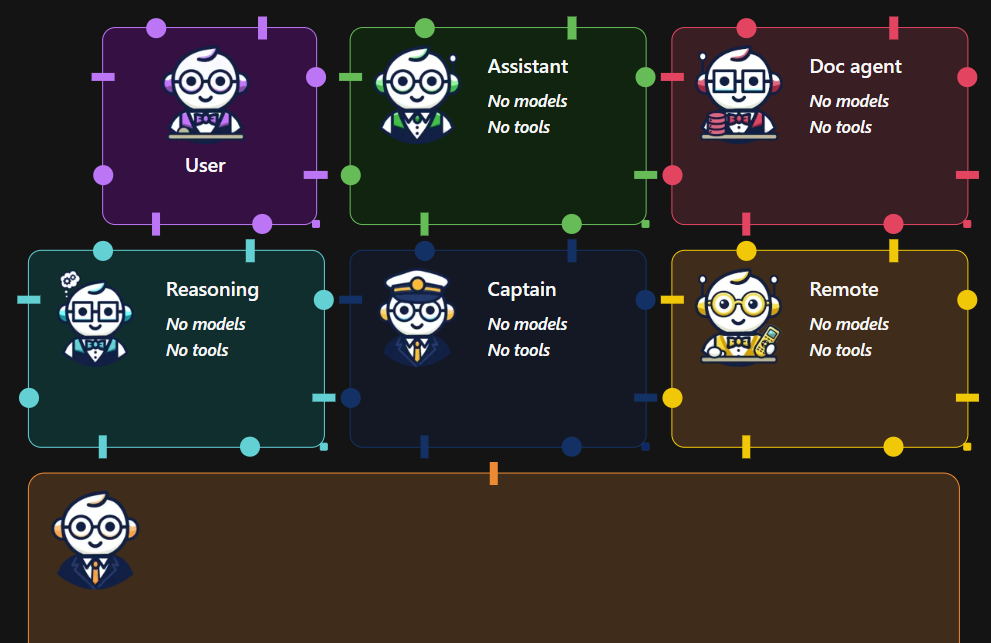
Adding Agents to the Canvas
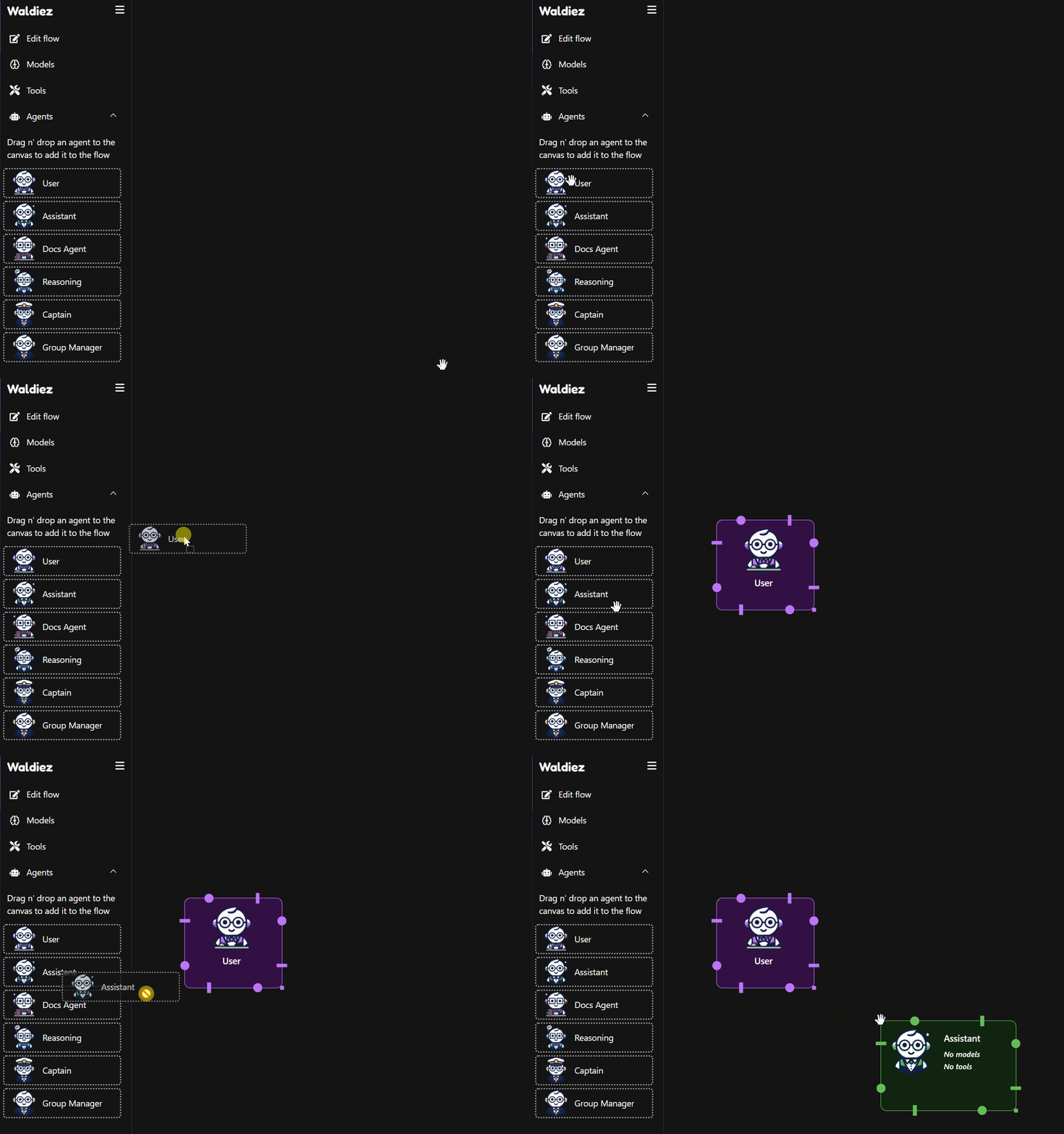
On the left sidebar, you'll find options such as "User", "Assistant", and "Group Manager". Drag and drop any of these to the Canvas to start building your workflow.
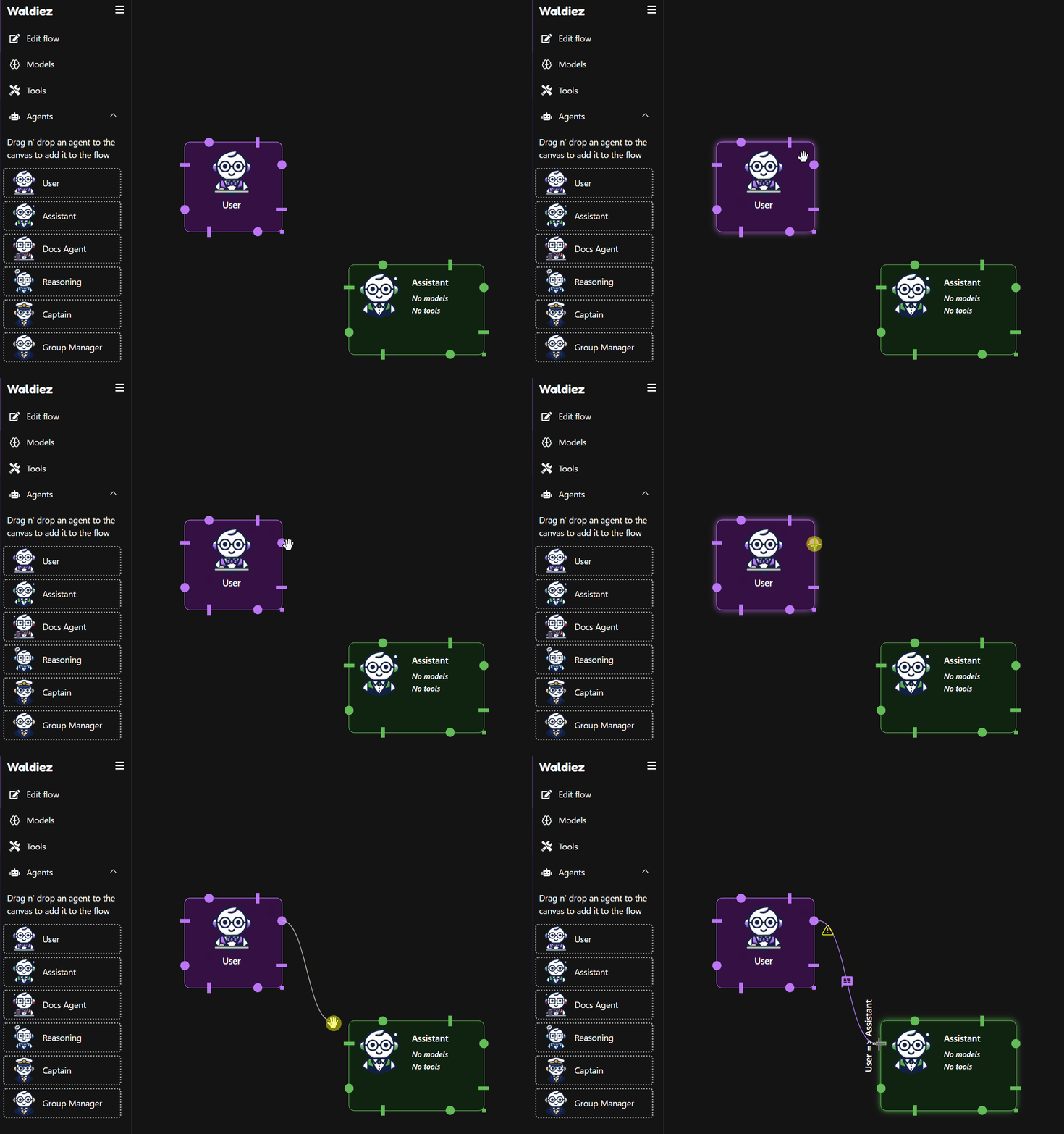
Connecting Agents - Defining the Flow
Agents communicate by passing messages along connections.
To link two agents:
1. Click and drag from one agent’s output node
2. Drop the connection onto another agent's input node
This defines the direction of communication, control, and execution in your workflow.
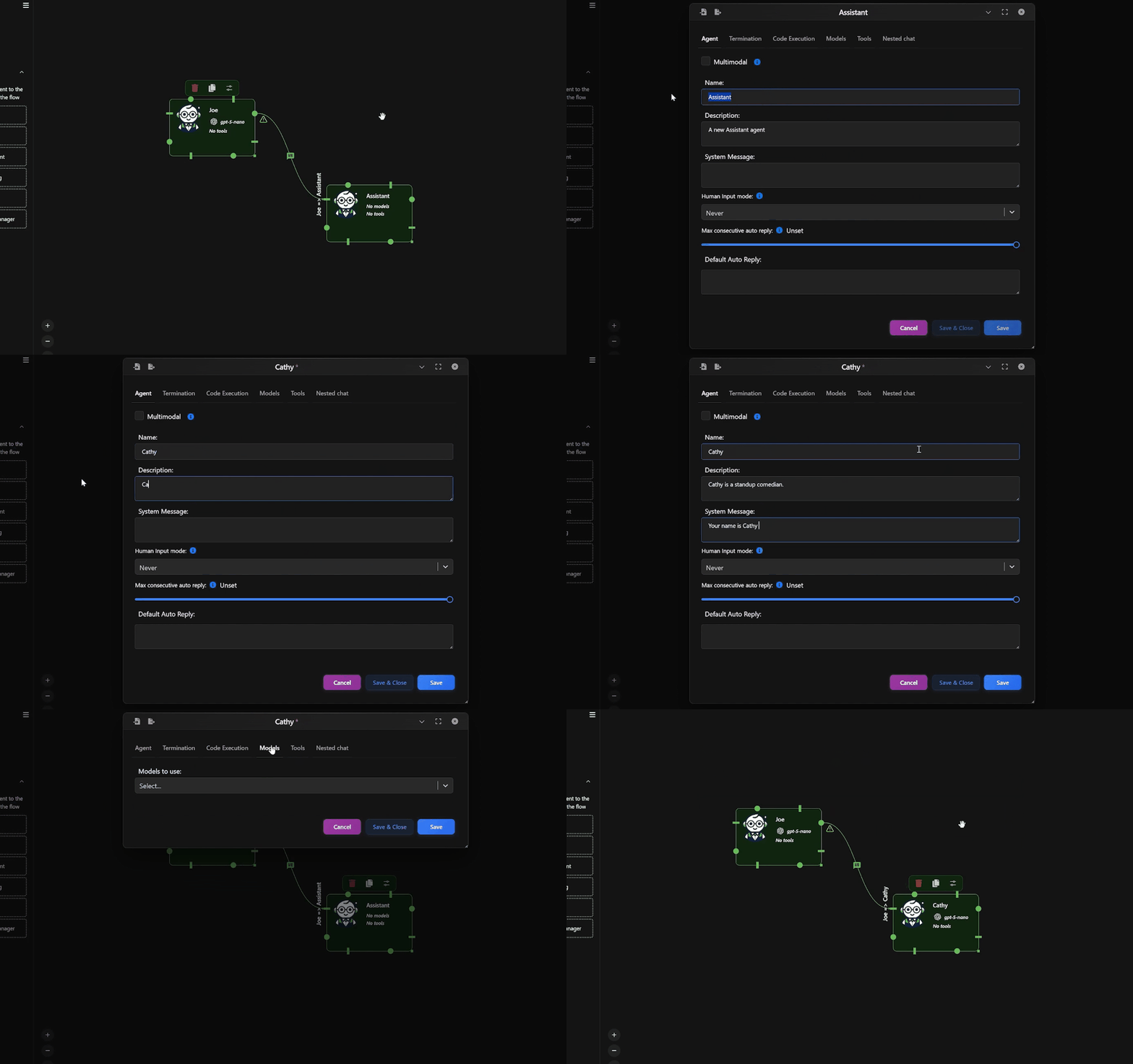
Configuring Agent Behavior
Each agent can be customized to control:
- Its name and role
- The model(s) it uses
- Its system message and behavior
- Linked tools and capabilities
- Conversation rules and termination conditions
To edit an agent:
- Double-click it on the Canvas
- Adjust its settings in the configuration panel
How to Think About the Canvas
You can treat the Canvas as:
- A conversation map
- A decision pipeline
- A multi-agent simulation board
- Or a modular AI workflow builder
Each connection defines who speaks, who listens, and who decides, enabling you to scale from a single assistant to complex, orchestrated agent systems.
What to Explore Next
You’ve learned how the Canvas works.
Now it’s time to understand the agents that live on it.
1️⃣ Meet the Agents
Each agent has a distinct role in a workflow.
We recommend skimming through them first to build intuition.
- 🧍 User Agent
Entry point for human input and interaction
- 🤖 Assistant Agent
Core LLM-driven reasoning and response generation
- 📚 Docs Agent
Documentation-aware agent for grounded answers
- 🧠 Reasoning Agent
Structured, multi-step reasoning and analysis
- 🧭 Captain Agent
High-level decision-making and delegation
- 👥 Group Manager
Orchestrates multi-agent conversations and flow control
- 🌐 Remote Agent
Connects to agents running in other processes or machines
💡 Tip: Start with User, Assistant, and Manager if you’re new.
2️⃣ Learn How Agents Work Together
Once you know the agents, learn how to connect and orchestrate them:
- Flow
Define execution order, message routing, and control logic
3️⃣ Explore Real Workflows
See complete examples you can reuse or remix:
- Examples
From onboarding flows to RAG, coding, and planning agents
4️⃣ Build Your First Workflow
Ready to build?
- Quick Start
Go from empty canvas to working multi-agent system in minutes